
ONONDAGA COUNTY, JULY 2, 2026 – With the upcoming holiday weekend and the high temperatures in Central New York, Onondaga County Health Department urges all residents to take proactive measures to protect against tick and mosquito bites and extreme heat. While spending time outdoors is encouraged, it’s important to keep in mind that ticks, mosquitoes, and high temperatures can still pose risks, and taking a few simple precautions can help keep your weekend safe and fun.
Tick Safety Tips
- Stay in clear areas: Walk in the center of trails and avoid wooded or brushy areas where ticks are common.
- Dress smart: Wear long sleeves, long pants tucked into socks, and light-colored clothing to help spot ticks.
- Use repellents: Apply EPA‑registered repellents (DEET, picaridin, OLE, IR3535) and treat clothing and gear (e.g., boots, tents) with permethrin.
- Conduct regular tick checks: Check your body, children, and pets, especially after spending time outdoors. Shower within two hours to remove unattached ticks.
- Remove ticks properly: Use fine-tipped tweezers, grasp the tick close to the skin, and pull steadily without twisting.
- Seek care: Call your healthcare provider if a tick has been attached for more than 36 hours or if you develop symptoms such as a bull’s‑eye rash, fever, fatigue, chills, headache, muscle or joint aches, or swollen lymph nodes. Serious complications can include arthritis, facial palsy, meningitis, neuropathy, memory issues, and heart rhythm problems.
- Consider using the Upstate Tick Testing Lab: If you find a tick on yourself or a family member, consider sending it to the Upstate Tick Testing Lab to identify the species and test for pathogens, helping guide next steps and giving you added peace of mind.
Mosquito Protection Measures
- Use repellent: Apply an EPA-registered repellent (20% picaridin or 10%–30% DEET). Follow label directions. Do not use repellent on babies under 2 months.
- Don’t let them in! Mosquito-proof your home by making sure all windows and doors have screens. Repair any broken screens.
- Eliminate standing water: Mosquitoes lay eggs in stagnant water. Empty birdbaths, buckets, plant saucers, and similar containers.
- Use protective clothing and treated gear: Wear long, loose-fitting, light-colored clothing. Treat tents, backpacks, and outdoor gear with products containing 0.5% permethrin or use pre-treated items.
- Plan around mosquito activity: Mosquitoes are most likely to bite at dusk and dawn.
- Use mosquito diffusers: Outdoor mosquito diffusers can help reduce mosquitoes in your immediate area and provide added protection, especially when used with skin-applied repellent.
Extreme Heat Safety
- Stay hydrated. Drink plenty of fluids, even if you don’t feel thirsty. Aim for at least 64 ounces a day. On very hot days, drink about 8 ounces (1 cup) every hour. If you’re active or spending time outdoors, you’ll need more fluids. If your doctor has told you to limit fluids or you take diuretics, ask how much you should drink.
- Pregnant or breastfeeding? You’ll need extra water to stay cool and support your body. Aim for at least 80 ounces a day unless your doctor says otherwise.
- Avoid drinks with caffeine, sugar, or alcohol. These can cause you to lose more fluid.
- Stay inside with air conditioning if you can. Don’t have AC? Head to a mall, library, or designated cooling center. Just a few hours in AC can make a difference.
- Need help getting an AC unit? Check if you’re eligible for the HEAP Cooling Assistance Program.
- Fans might not be enough. When it’s over 90ºF, electric fans won’t prevent heat illness. Try a cool shower or bath or place cold cloths or ice packs on your neck and face.
- Dress for the weather. Wear loose, lightweight, light-colored clothing to reduce heat absorption.
- Use sunscreen. Use a sunscreen labeled “broad spectrum” with an SPF of 30 or higher. Sunscreen works by blocking the sun’s rays, which can keep your skin cooler. Reapply every two hours or immediately after swimming or sweating.
- Never leave people or pets in parked cars. Even with the windows cracked, the temperature can become deadly in minutes.
- Skip the stove. Using the oven or stove heats up your home even more.
- Avoid outdoor activities during the hottest part of the day. Plan exercise or chores for early morning or late evening.
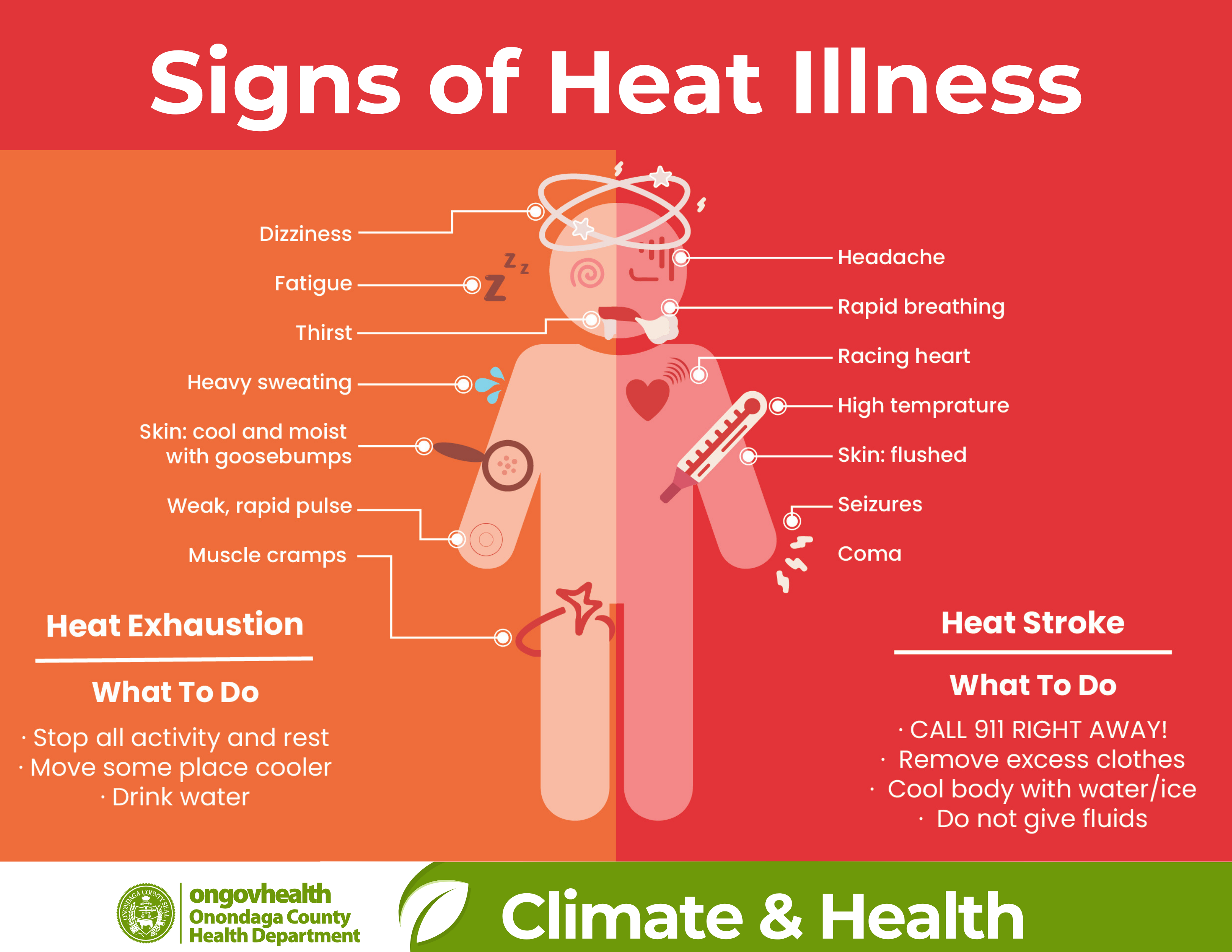
- Know the signs of heat exhaustion (excessive sweating, dizziness, fatigue, nausea) and heatstroke (hot, red skin, rapid pulse, confusion). If you or someone around you shows these symptoms, move to a cool or shaded location and seek medical attention immediately by calling 911
Enjoy a safe and enjoyable holiday weekend!
For more details and up-to-date alerts, visit:
• CDC Vector-borne Diseases Prevention
• Heat.gov for heat safety resources
• Onondaga County Health Department for vector-borne and heat safety resources